
The first website I really remember building was for a party supply company, and it was miserable work.
Hand-coded HTML. Hundreds of product images resized one at a time, late at night, for weeks. Balloons, streamers, folding tables.
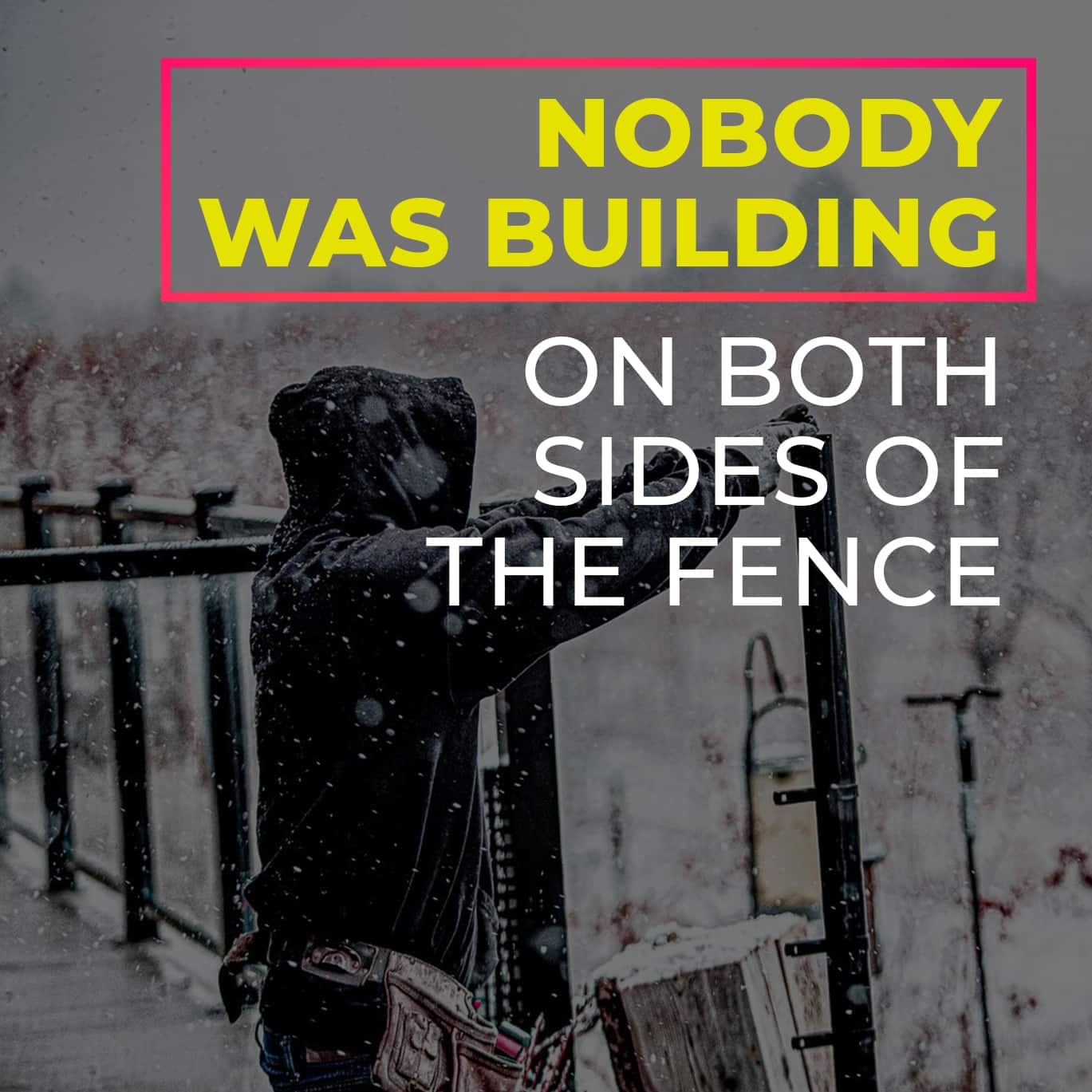
I learned how a website actually worked. I also learned something I didn’t have the words for yet: almost every company building these things had picked a side of the fence, and neither side was building anything that helped the business.
On one side were the code people. The site worked, it loaded, the forms fired. It also had all the personality of a parking garage.
On the other side were the design people. Beautiful work. Gorgeous. Did nothing.
I remember sitting there thinking somebody ought to bridge that gap.
A website should look good. It should work properly. But more than either of those, it should help a business grow.
That’s still the whole job, twenty-something years later.
From Commercial Fishing to Contractors
My path into this wasn’t the one my family would have drawn up.
I come from a commercial fishing family. That was the natural direction. Boats, weather, early mornings, and a living made with your hands. Instead I ended up in a technical world, and eventually I ended up working with contractors.
One of the first was a general contractor who built homes. Working with him cracked something open for me: localized search.
For the first time I understood what it meant to make a business visible to the people standing in the same geography where that business actually worked. Not visible to everybody. Visible to the right somebody.
It wasn’t about building a website. It was about connecting the right business to the right customer inside the right few square miles.
That was the moment. And honestly, it’s still most of what I do.
The Numbers Will Lie to You If You Let Them
Here’s a conversation I’ve had more times than I can count.
A contractor calls, pulls up his analytics, and says: “I had a thousand visitors last month. Why didn’t I get a thousand leads?”
I get it. A thousand sounds like a lot. A thousand people is a packed high school gym.
But traffic by itself tells you almost nothing.
Where did those people come from? What page did they land on? Were they even inside your service area? Did they call? Did they fill out a form? Did any of it turn into a job on the calendar?
Those are completely different questions than “how many.”
Traffic has become the easiest vanity metric in marketing. If it’s the only number you watch, you’re going to be disappointed, and you’re going to be disappointed on a schedule.
I would rather have 300 people who live where you work, looking for the thing you sell, than 3,000 who will never be a customer under any circumstance.
And here’s the version of this that actually bothers me.
The report lands on the first of the month. Traffic is up eighteen percent. There’s a green arrow next to it. Everybody in the meeting feels good about themselves.
Meanwhile the owner is sitting there knowing his crews had open days in April, and he cannot make those two facts agree. So he quietly assumes the problem is him. Maybe he’s not closing well enough. Maybe his prices are off.
It isn’t him. It’s the number.
The goal was never traffic. The goal is meaningful activity.
Marketing Requires Teaching
This is the part I think our industry mostly skips.
We are supposed to be educating our clients.
I’ve never had any use for the man behind the curtain routine. There are agencies that work very hard to make this sound harder than it is. Technical language. Forty-tab spreadsheets. Dashboards nobody opens twice. Terminology a business owner has no reason on earth to know.
Complexity makes a great shield. If the client can’t follow what you’re doing, the client can’t question what you’re doing.
I think the opposite is better business.
Explain it. Show them what matters and why. Show them the decisions and the reasoning behind the decisions.
If an owner is watching the wrong number, don’t just tell him the number is fine. Reframe it. Show him which pages produce the phone calls. Show him which services are generating actual opportunities. Show him what’s moving the company forward and what’s just moving.
That conversation makes the relationship better for everybody in it.
Being Honest Will Cost You Work
There’s a price on that, and I’ve paid it.
I’ve had prospects sit down with me, ask what I’d do, take notes on everything I said, and then walk it straight back to their current marketing company and ask them to implement it.
Did it cost me the account? Absolutely. There have been plenty of times where being open bit me square in the backside.
I’d still do it the same way.
If somebody is comfortable with their current partner, and something I said makes that relationship work better, I can sleep fine. I want to see businesses succeed. That was the point before it was ever a business model.
You don’t have to fight for every client. Losing one just leaves room for the next one, and the next one usually wants the kind of relationship we want to build anyway.
The Best Relationships Are Not Hands-Off
The biggest misconception about hiring an agency is that the owner gets to vanish.
I understand the impulse completely. Most contractors carry the entire company on their back. Payroll. Crews. Customers. Scheduling. Material costs. Equipment breaking at the worst possible hour. The job that went sideways on Tuesday.
When they finally hire somebody for marketing, they want one thing off the pile. That’s fair.
But the good ones are partnerships, not handoffs.
We bring the strategy, the technical work, the creative, the execution. The contractor brings something we cannot generate on our own: he knows the business.
He knows which services are actually profitable. He knows the question every homeowner asks before they’ll sign. He knows what his competition does badly. He knows why his crews are better.
That information is the raw material. Lumber on the trailer is not a fence yet, and nobody on my team can go cut it for him.
Some of our client relationships have run eight and ten years. The thing those accounts have in common isn’t budget. It’s that they talk to us. They answer the question. They tell us what’s happening in the field. And because of that, the work is better.
Communication Is the Hard One
At Clever Fox we talk about integrity, perseverance, communication, and creativity.
Communication is the hardest of the four. It isn’t close.
Especially in this trade. Nobody got into contracting because they wanted to debate content strategy. They started a company because they knew how to build something, fix something, install something, or solve a problem other people couldn’t.
Marketing feels like a foreign language to a lot of them, and pretending otherwise doesn’t help anybody.
So the agency has to walk further. Ask better questions. Translate. Make it easy to answer.
And the owner has to be willing to pick up the phone.
When both sides do that, everything else gets easier.
You Cannot Fake Passion
If I could hang one thing on the wall of every small business I work with, it would have something to do with passion.
I can tell inside of five minutes when I’m talking to a contractor who loves this work. The energy changes. He stops talking about jobs and starts talking about a specific gate he built on a hill where the grade was fighting him the whole way. He cares about the detail. He cares about the customer standing in the driveway at the end of it.
That matters, and not for sentimental reasons.
Running a small business is hard. Long days, slow seasons, difficult customers, employee problems, cash flow that tightens in February. You do not survive that stack of things for twenty years on strategy alone.
Marketing can grow a business. SEO can make it visible. Ads can create opportunity. Automation can buy back hours. AI is going to keep changing how fast all of it moves.
None of it manufactures passion. That has to already be in the building.
What I Believe After All These Years
The longer I do this, the less impressed I am by trendy tactics.
The fundamentals keep winning.
Tell the truth. Set expectations you can actually hit. Measure the things that matter and ignore the things that just feel good. Communicate. Educate. Stay involved. Care about the customer.
And keep some passion for what you’re building.
Marketing works best when it supports a good business. It does not replace one. If I’ve learned anything worth handing to somebody else, that’s probably it.
The technology will keep changing. The platforms will change. Search will change. AI is going to change how all of us work, and there will always be a new acronym or a new shiny object everybody swears is the whole ballgame.
The companies still standing in ten years will be built on the same things they always were.
Good work. Clear communication. Honesty. Persistence.
And people who still give a damn.
*Photo credit goes to my friends at OK Vinyl Fence in Okanagan, BC. Stay strong, my friends!